More pipeline. Higher win rates. A forecast that holds.
I help SaaS companies build the sales engine that convinces customers and that investors want to see – with value-based selling, MEDDIC and a team in which every role knows exactly what to do.

Sound familiar?
Each of these sentences sounds like bad luck. In fact, it is almost always a qualification problem – and that means it can be fixed.
Every stage has a different problem
I work with SaaS companies from the first funding round to the growth stage. At each stage, three levers have the biggest impact.
Prove the business model
You are very early, want to convince investors and need real conversations with real customers to do it. Thanks to AI agents, hiring isn’t the issue yet – access to potential customers, partners and other investors is.
Pick up speed
The capital is there, now speed is what counts. Many teams are too technical – the successful ones are those who can sell, even when the product isn’t a 100% fit yet. And with AI, a small team today achieves what used to take a large one.
Gear the organization for efficiency
Established companies with larger sales teams – from Series C or private-equity-owned. Now it’s not just about growth, but profitability: PE investors in particular expect EBITDA targets to be met. Yet the forecast is hard to call, sales and marketing roles don’t mesh cleanly and responsibilities are unclear – and that costs margin.
Five levers for predictable growth
Bookable individually – most effective together. Every lever ends with tools your team can use the very next day.
More qualified leads
Content that informs instead of sells – 90% know-how, 10% product –, campaign planning across the entire funnel, and an outbound team that calls with the right playbook for every industry and persona. Plus a partner ecosystem that brings additional pipeline. Goal: measurably more pipeline and closed deals within 6 months.
Higher win rates through value-based selling
A higher ROI than the alternative is the strongest argument in sales. We define your customer value, translate it into payback and tell it consistently – from the website through the demo to the proposal. This includes battle cards against the competition and – often decisive in enterprise deals – analyst relations aimed at the Gartner Magic Quadrant or the Forrester Wave.
A forecast that holds
A forecast shouldn’t rest on a “best guess”, but on structured qualification. We embed MEDDIC into every step of a seven-stage sales process – with clear outcomes per stage and all data in the CRM. For the CRM implementation – HubSpot or Salesforce, for example – I work with specialized partners. That gives your team up to 30% more time for real selling.
The right sales team – with AI as a team member
With AI, small teams achieve more today than large teams used to. That’s why we plan AI like an employee: with its own role, clear tasks and a measurable contribution – from account research and personalized outreach to call preparation and CRM upkeep. Alongside this, we define what SDRs, account executives and value engineers do, and who takes over when.
Job descriptions, compensation & KPIs
Job profiles that attract the right people, compensation plans that reward the behaviour you want, and three to five KPIs per department that align everyone on one goal: more won deals. Plus standard contracts and terms that don’t leave deals stuck at quarter-end.
Qualifying is closing
Qualification isn’t a one-off event but part of every single sales step. MEDDIC gives your team a common language for it.
What economic impact does the solution have for the customer – in euros?
Metrics are the numbers on which the economic buyer decides – usually the internal project business case. Customers question individual numbers, rarely the methodology. You position your value through the calculation methodology.
Good customer relationships are as important today as ever – but they don’t scale. Those who sell on customer value can scale. Especially in enterprise sales, you need to know exactly what value you deliver to the company.
Train. Define. Steer.
It starts with a shared understanding. Only once everyone knows what value-based selling is about can message, process and roles be sharpened in a meaningful way.
Train
We start with MEDDIC training for your team – as an interactive workshop, not a lecture. Afterwards, everyone understands what value-based selling is about. And you see right away who picks up the topic quickly and who needs more support.
Define
Together, we rework your value proposition and define it for your different target groups. Building on that, we sharpen the marketing message and optimize the sales process, the role model and the entire presales process.
Steer
I work directly with your people: I sit in pipeline reviews and listen to the questions sales leadership asks, and I join customer calls to see how your team talks to customers. Add KPIs per department and a forecasting method that holds.
Growth that shows in your valuation
From my own private equity transactions, I know what buyers look for. That’s why we align sales and contracts from day one with the factors that drive the multiple – not just with the next quarterly close.
What changed for clients
From “energy system” to a business case the CFO signs
The CFO has twenty projects on the table and ranks them by ROI. The facility manager likes the solution but can’t explain its value internally. Over four months, we solved this together: from a workshop for the sales team, through reworking the value proposition for each target group and defining the sales processes, to representing the pipeline correctly in the CRM – so the probability of every deal can be verified.
- 1Workshop for the sales team
- 2Value proposition per target group
- 3Sales processes defined
- 4Pipeline set up correctly in the CRM
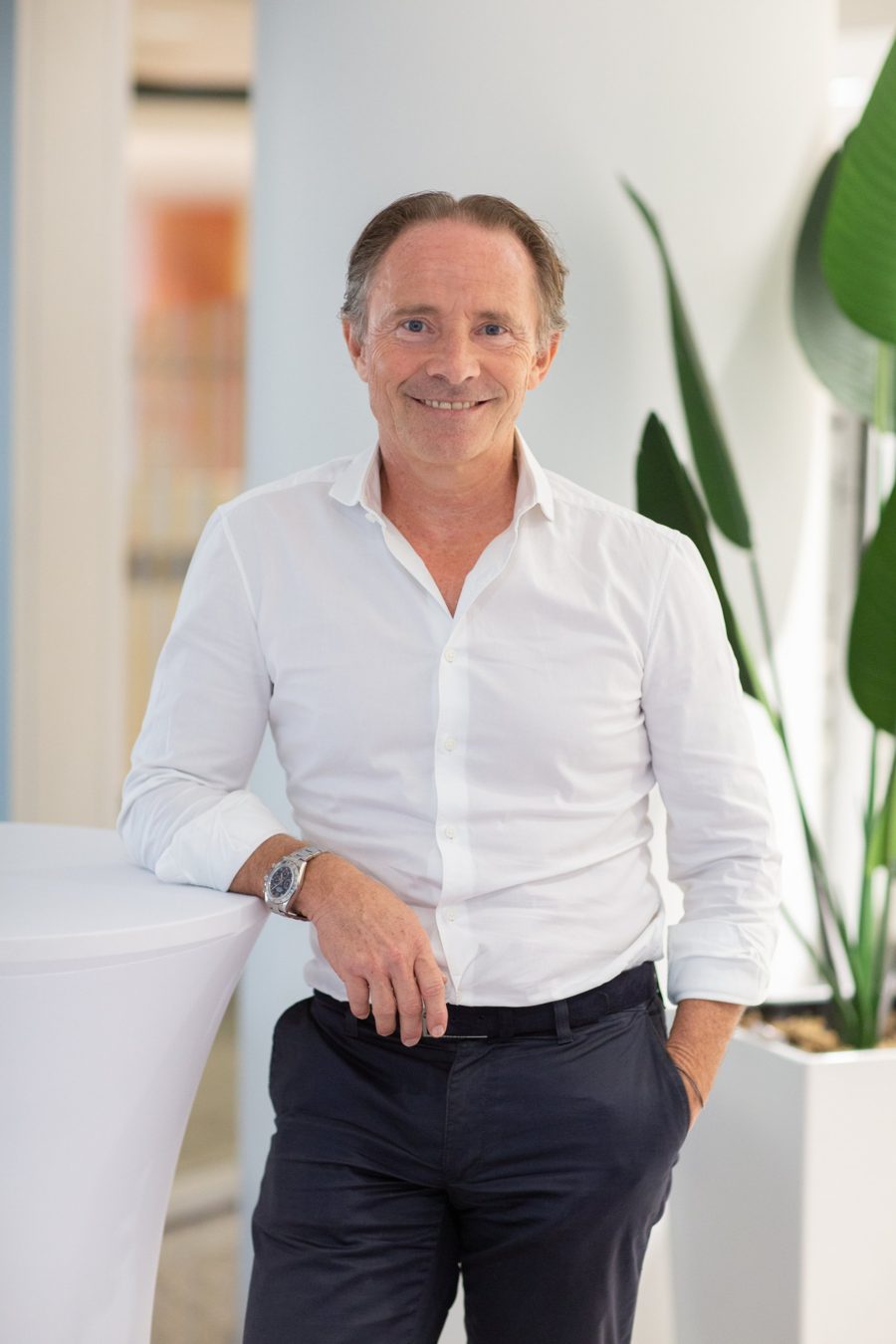
From SaaS sales, not from a textbook
I’m Thomas Dieringer. I have founded, built and successfully sold three companies, scaled a procurement SaaS globally and led 500 employees as President EMEA. Since 2021, I have been passing this experience on to SaaS companies with sales.exchange, from Vienna.
Honestas Capital is my investment vehicle: through it, I invest in SaaS companies myself. With sales.exchange, we support these portfolio companies – and external clients – hands-on in marketing and sales.
I know both sides of the table: as part of JAGGAER’s international M&A team, I screened more than 50 companies – I know what buyers and investors look for. And because I ran a manufacturing company with ProTEC, I also understand industrial customers.
Frequently asked questions
Answered briefly: value-based selling, MEDDIC, AI in sales and how working together works.
What does sales.exchange do?
sales.exchange is a sales and revenue consultancy for B2B SaaS companies based in Vienna, Austria, founded in 2021 by Thomas Dieringer. It helps startups, scale-ups and established software companies win more qualified leads, increase win rates with value-based selling and make the sales forecast predictable with the MEDDIC methodology.
What is value-based selling?
Value-based selling is a sales approach that focuses not on product features but on the measurable economic value for the customer – for example as ROI or payback period. Sales teams that sell this way win more deals, end up in price negotiations less often and scale better than teams that rely mainly on personal relationships.
What is MEDDIC and how does it improve the sales forecast?
MEDDIC is a methodology for qualifying B2B sales opportunities. The letters stand for Metrics, Economic Buyer, Decision Criteria, Decision Process, Identify Pain and Champion. Only once these six points are clear can the probability of closing a deal be assessed realistically and the deal be classified cleanly as forecast, upside or at-risk. This makes the forecast more reliable, and deals slip into the next quarter less often.
Why isn’t BANT enough in enterprise sales?
BANT (Budget, Authority, Need, Timing) works for simple inbound deals. In enterprise sales, budget is not a good qualification criterion: whoever knows the economic value and proves it to the economic buyer creates the budget. MEDDIC reflects complex buying decisions with multiple stakeholders far better.
Which companies is sales.exchange’s consulting suited for?
sales.exchange works with SaaS companies in three stages: pre-seed and seed (winning first customers, convincing investors), Series A and B (scaling lead generation, building lean sales teams with AI) and growth companies from Series C or private-equity-owned (forecast, clear roles, efficiency and EBITDA targets).
How does an engagement work and how long does it take?
An engagement starts with a 1–2 day interactive MEDDIC training. Over the following 2–4 weeks, with 4–5 consulting days, the value proposition, marketing message, sales process, presales process and role model are reworked. During ongoing execution, Thomas Dieringer joins pipeline reviews and customer calls.
How is AI changing B2B sales?
AI now takes on tasks such as account research, personalized outreach, call preparation and CRM upkeep. As a result, small sales teams achieve what used to require large ones. sales.exchange therefore plans AI in like a team member – with a clear role, defined tasks and a measurable contribution.
What is the difference between an SDR, an account executive and a value engineer?
The sales development representative (SDR) generates and qualifies new leads. The account executive (AE) leads the opportunity through to closing and owns the deal. The value engineer calculates the ROI for the customer and shows in the demo how the solution delivers that value.
Does sales.exchange work with HubSpot and Salesforce?
Yes. sales.exchange configures CRM systems such as HubSpot and Salesforce so that MEDDIC qualification, forecast categories and reporting work in day-to-day sales. For the technical implementation, sales.exchange works with specialized CRM partners. A clean CRM configuration gives sales up to 30% more time for real selling.
Where is sales.exchange based?
sales.exchange (SEC sales.exchange consulting GmbH) is based in Vienna, Austria, at Grünangergasse 12, and advises SaaS companies in Austria, Germany, Switzerland and internationally – in German and English.
Who is Thomas Dieringer?
Thomas Dieringer founded sales.exchange in 2021 so that other companies can benefit from his experience and network. He has founded, built and sold three companies – including the procurement SaaS provider POOL4TOOL/JAGGAER – and, as President EMEA at JAGGAER, was responsible for the business outside the US with around 500 employees. He has shaped five private equity transactions – as a manager and as an investor. Through Honestas Capital, he invests in SaaS companies himself.
Where is your funnel losing revenue?
In a free 30-minute revenue check, we look at pipeline, win rate and forecast together – and you leave with three concrete levers.